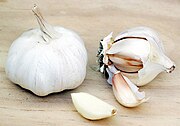
 Allium sativum L., commonly known as garlic, is a species in the onion family Alliaceae. Its close relatives include the onion, the shallot, and the leek. Garlic has been used throughout recorded history for both culinary and medicinal purposes. It has a characteristic pungent, spicy flavor that mellows and sweetens considerably with cooking.[1]. A bulb of garlic, the most commonly used part of the plant, is divided into numerous fleshy sections called cloves. The cloves are used as seed, for consumption (raw or cooked), and for medicinal purposes. The leaves, stems (scape) and flowers (bulbils) on the head (spathe) are also edible and most often consumed while immature and still tender. The papery, protective layers of 'skin' over various parts of the plant and the roots attached to the bulb are the only parts not considered palatable.
Garlic is widely used around the world for its pungent flavor, as a seasoning or condiment. The flavour varies in intensity and aroma with cooking methods. It is often paired with onion, tomato, or ginger. The parchment-like skin is much like the skin of an onion, and is typically removed before using in raw or cooked form. An alternative is to cut the top off the bulb, coat cloves of garlic by dribbling olive oil (or other oil based seasoning) over them and roast them in the oven. The garlic softens and can be extracted from the cloves by squeezing the (root) end of the bulb or individually by squeezing one end of the clove.
Oils are often flavored with garlic cloves. Commercially prepared oils are widely available, but when preparing garlic-infused oil at home, there is a risk of botulism if the product is not stored properly. To reduce this risk, the oil should be refrigerated and used within one week. Manufacturers add acids and/or other chemicals to eliminate the risk of botulism in their products.
In Asia, garlic is fundamental to Korean and Thai cuisine. In Chinese cuisine, it is usually chopped and stir-fried with chopped ginger and other aromatics in oil as the basis of sauces. Japanese cuisine uses very little garlic.
Garlic along with ginger form the basis for most of the Indian curries and cooked varieties of rice such as pulao, biriyani, coconut rice etc.
